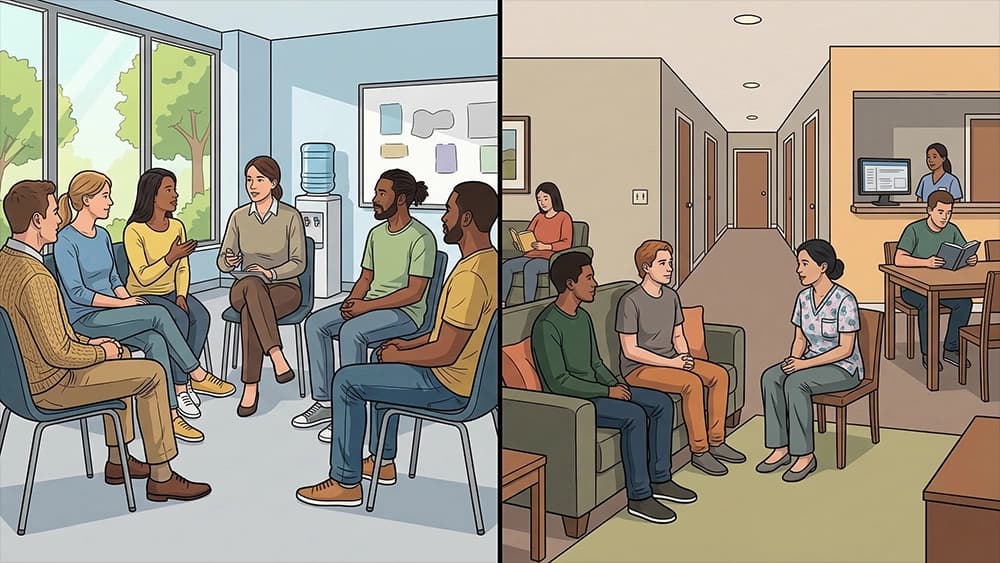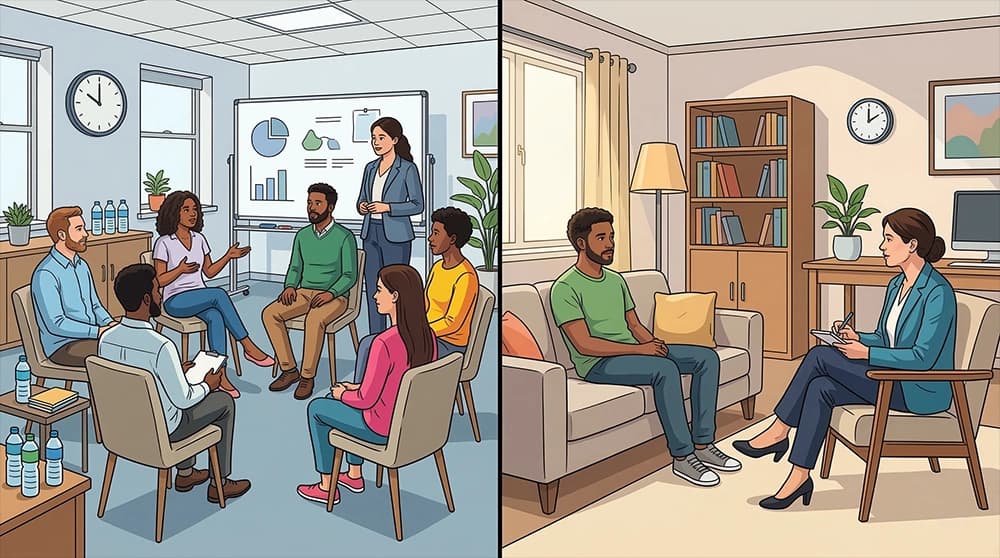

Sober living residents show significant decreases in substance use at 6, 12, and 18 months. Couples-specific programs require separate bedrooms while allowing shared common areas and joint therapy. Monthly rent averages $900/room in California. Both partners must complete primary treatment first.
- 1Sober living shows significant substance use decreases at 6, 12, and 18 months
- 2Couples programs require separate bedrooms with shared common areas
- 3Both partners must complete detox and primary treatment before admission
- 4Monthly rent averages $900 per room in California
- 5Dual accountability produces measurably better outcomes for couples
Finding sober living homes for couples requires careful research and planning. These specialized facilities offer unique benefits for partners committed to recovery together.
We at Amity San Diego understand the importance of maintaining healthy relationships during the recovery process. The right sober living environment can strengthen your bond while supporting individual growth and sobriety goals.
Sober living homes operate as structured, substance-free environments where residents follow house rules, attend mandatory meetings, and submit to regular drug testing. Research shows individuals in sober living facilities demonstrate significant decreases in substance use at 6, 12, and 18-month intervals compared to those without structured support. Most facilities require residents to stay at least five nights per week, maintain employment or education, and participate in household responsibilities while they pay monthly rent (which averages $900 per room in California).
Most traditional sober living homes discourage romantic relationships because they create distractions from individual recovery work. Standard co-ed facilities typically house men and women separately with strict interaction policies. However, couples-specific programs operate under different principles. These specialized facilities require couples to maintain separate bedrooms while they allow shared common areas and joint therapy sessions.
The National Alliance for Recovery Residences reports that sober living residents come from various referral sources, but couples programs specifically target partners who completed treatment together and want to continue recovery as a unit.
Couples-focused sober living creates dual accountability layers that standard facilities cannot match. Partners monitor each other's sobriety while house managers track both individuals through mandatory check-ins and testing protocols. This system produces measurably better outcomes because couples report enhanced communication skills and conflict resolution abilities after shared sober living experiences. The structured environment teaches practical relationship skills through daily interactions, house meetings, and joint participation in recovery programs.
Facilities with couples programs typically maintain stricter admission requirements than standard sober living homes. These programs require proof of relationship stability and individual treatment completion, which makes them more selective but potentially more effective for committed partners. Most couples-specific facilities also mandate that both partners complete detox and primary treatment before admission. This careful screening process helps facilities maintain their success rates while they create environments where couples can focus on recovery without the chaos that untreated addiction brings to relationships.
For those seeking comprehensive support, addiction treatment San Diego offers specialized programs designed to help couples navigate recovery together.
Ask facilities about their specific couples policies, including bedroom arrangements, visitation rules, and joint therapy requirements. Quality programs require both partners to complete primary treatment before admission and maintain individual recovery plans alongside couple-focused activities. Request detailed information about house rules, curfew policies, drug testing frequency, and consequences for violations. The best facilities provide transparent answers about their success rates, average length of stay, and alumni outcomes. Programs that hesitate to share specific policies or outcomes data typically lack the structure needed for successful couples recovery.
Avoid facilities that allow couples to share bedrooms immediately upon admission, as this arrangement often leads to codependency rather than individual growth. Programs that don't require proof of completed treatment or maintain loose admission standards create unstable environments where relapse becomes more likely. Facilities with unclear fee structures, no written policies, or managers who cannot explain their treatment philosophy lack the professionalism needed for serious recovery work. Any program that promises unrealistic outcomes or refuses facility tours should be eliminated from consideration immediately.
Frequently Asked Questions
Can couples live together in sober living homes?
Most traditional sober living homes discourage romantic relationships. However, couples-specific programs exist that require separate bedrooms while allowing shared common areas and joint therapy sessions. Both partners must complete primary treatment first.
What are the benefits of couples sober living?
Couples-focused sober living creates dual accountability layers. Partners monitor each other's sobriety while house managers track both individuals. Couples report enhanced communication skills and conflict resolution abilities after shared experiences.
What should I look for in couples sober living?
Quality programs require both partners to complete primary treatment, maintain individual recovery plans, and participate in couple-focused activities. Avoid facilities allowing immediate bedroom sharing, as this often leads to codependency.
How do I find couples sober living in San Diego?
Look for NARR-affiliated facilities with specific couples policies, transparent success rates, and facility tours. Contact Amity San Diego at (888) 666-4405 for guidance on couples recovery housing options.
Sources & References
This article is based on peer-reviewed research and authoritative medical sources.
- Recovery Housing — SAMHSA (2024)
- Couples Therapy and Substance Use Disorders — NIDA (2024)
Amity San Diego
Amity San Diego Medical Team